
Managing Multiple Job Invoices Without Losing Track of Payments
When you’re running multiple jobs across a factory environment, invoicing stops being a simple admin task and turns into a coordination problem. Different projects move at different speeds, payment terms vary by client, and costs are often spread across labour, materials, and subcontractors. It doesn’t take much for things to slip through the cracks.
What starts as a few overdue invoices can quickly become a cash flow issue that affects payroll, supplier relationships, and the ability to take on new work. The challenge is not just issuing invoices. It is staying on top of them across multiple jobs without losing visibility.
Why Multi Job Invoicing Gets Complicated Quickly
In factory and production environments, invoicing is rarely linear. You might be working on five or ten jobs at once, each with its own timeline and billing structure. Some invoices are issued upfront, others at milestones, and some only after delivery or installation.
This creates a situation where payments are staggered, and tracking them manually becomes difficult. A spreadsheet might work when you have a handful of clients, but once volume increases, it becomes harder to answer basic questions like:
- Which jobs are fully paid
- Which invoices are overdue
- Which customers consistently delay payment
According to a report from the Australian Small Business and Family Enterprise Ombudsman, late payments impact more than 50 percent of small businesses, often leading to operational strain and reduced growth opportunities. In environments where multiple jobs are running simultaneously, that impact is amplified.
The Hidden Risks of Losing Track of Payments
Losing visibility over invoices does not just affect cash flow. It creates operational blind spots that ripple through the business.
For example, if a job appears profitable on paper but several invoices remain unpaid, decisions based on that data can be misleading. You might continue working with a client who regularly delays payment, or take on additional work without realising your cash position is weaker than expected.
There is also the risk of duplicated effort. Teams end up chasing the same invoice multiple times, or worse, not at all because everyone assumes someone else is handling it.
A finance manager I worked with in a mid sized manufacturing firm put it simply:
“We weren’t struggling to generate revenue. We were struggling to collect it in a way that matched how fast we were producing.”
That gap between production and payment is where most issues arise.
Breaking Down Invoices by Job and Stage
One of the most practical ways to regain control is to align invoices directly with job stages. Instead of treating invoices as isolated transactions, they should be tied to specific deliverables or milestones.
For example:
- Deposit invoice before production begins
- Progress invoice after a key production phase
- Final invoice upon delivery or completion
This structure makes it easier to track what has been billed and what is still outstanding for each job. It also gives both your team and the client a clearer understanding of expectations.
More importantly, it creates natural checkpoints for reviewing payment status before moving forward with additional work.
Creating a Single Source of Truth
A common issue in factory environments is fragmented information. Sales teams have one view of the job, operations have another, and finance is working from a separate system or spreadsheet.
When invoice data is scattered, it becomes difficult to maintain accuracy.
Bringing everything into a single system changes this dynamic. Whether it is a dedicated tool or an integrated process, the goal is to ensure that everyone is referencing the same data.
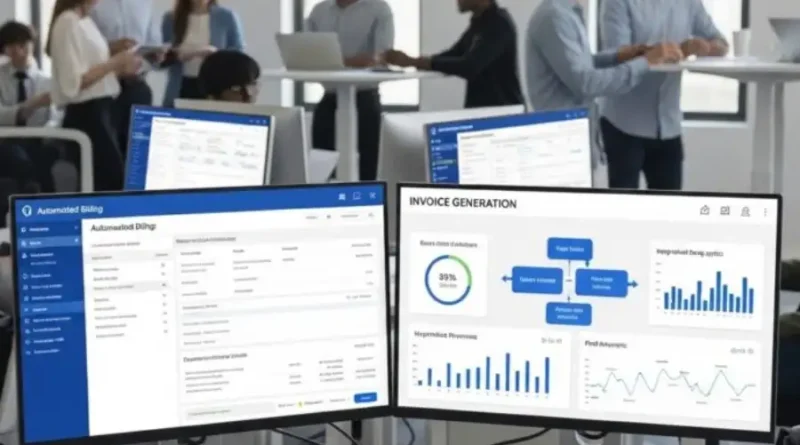
This is where tools like an accounts receivable platform become useful. They allow businesses to centralise invoice tracking, automate reminders, and maintain a clear record of payment status across all jobs.
The benefit is not just efficiency. It is clarity. You can quickly see which jobs are financially complete and which still carry risk.
Reducing Manual Follow Ups
Chasing payments manually is one of the biggest time drains for finance teams. It is also inconsistent. Some invoices get followed up promptly, while others are forgotten until they become a problem.
Automating follow ups ensures that every invoice is treated consistently. Reminder emails can be scheduled based on due dates, and escalation paths can be defined for overdue accounts.
This removes the reliance on memory or manual tracking. It also creates a more professional experience for clients, as communication becomes structured rather than reactive.
Improving Communication Between Teams
In many cases, payment delays are not just a finance issue. They are linked to communication gaps between departments.
For instance, a project might be completed, but finance is not notified to issue the final invoice. Or a client raises a dispute with the operations team, but finance continues chasing payment without that context.
Improving internal communication helps prevent these situations. Simple practices like regular check ins between project managers and finance teams can make a significant difference.
It ensures that invoices are issued on time, disputes are handled quickly, and payment tracking reflects the actual status of each job.
Setting Clear Payment Expectations with Clients
Another often overlooked factor is how payment terms are communicated upfront. If expectations are vague, delays become more likely.
Clear terms should be established before work begins, including:
- Payment deadlines
- Milestone triggers
- Consequences of late payment
Clients are more likely to pay on time when the process is transparent and consistent. It also gives your team a stronger position when following up on overdue invoices.
Maintaining Visibility as You Scale
As the number of jobs increases, the complexity of invoicing grows with it. What worked for ten jobs may not work for fifty.
The key is to build systems that scale with your operations. This means:
- Standardising invoicing processes
- Automating repetitive tasks
- Centralising data for easy access
Without these foundations, growth can actually make financial management harder rather than easier.
Conclusion
Managing multiple job invoices is not just about keeping records up to date. It is about maintaining control over how revenue flows through your business.
When invoices are tied to job stages, tracked in a central system, and supported by clear processes, the risk of losing track of payments drops significantly.
For many factory based businesses, adopting an accounts receivable platform is a natural next step. It brings structure to a process that often becomes chaotic as operations expand.
Ultimately, the goal is simple. You want your payment systems to move at the same pace as your production. When that alignment is in place, cash flow becomes more predictable, decisions become more informed, and the business is better positioned to grow without unnecessary friction.
Visit the rest of the site for more interesting and useful articles.
