
What Is Pulsamento? The Real Meaning, Explained Simply
You typed “pulsamento” into Google. Now you’re looking at ten different articles. One says it’s a Latin music genre. Another says it’s a wellness concept. A third says it’s an entertainment show. And none of them agree.
It’s frustrating. And the truth is, most of those articles are wrong.
So let’s fix that right now.
This article gives you the real definition of pulsamento, explains where the word comes from, and shows you all the ways it shows up in music, your body, and the world around you.
No fluff. No jargon. Just the real answer, explained simply.
So What Does Pulsamento Really Mean?
Let’s start with the most basic definition.
Pulsamento is an Italian word that means “pulsation.” It means a steady, rhythmic beat that keeps going.
Think of your heartbeat. It doesn’t just beat once and stop. It beats, then beats again, then again. That ongoing rhythm. That’s the idea behind pulsamento.
The word comes from the Latin verb pulsare, which means “to beat” or “to strike.” That same root gives us English words like pulse, pulsate, and even compulsion.
So when you break it down, pulsamento isn’t exotic or mysterious at all. It just means something that keeps beating in a steady, rhythmic way.
Now, the reason people get confused is that this idea shows up in many different places. Music. The human body. Nature. Technology. Each field uses the concept a little differently. But the same idea runs through all of them: a rhythm that keeps going.
Where Did the Confusion Come From?
Here’s something most articles won’t tell you.
A lot of websites took a simple Italian musical term and blew it up into something huge. They called it a “revolutionary concept,” a “wellness framework,” and a “global entertainment phenomenon.” Why? Because dramatic articles get more clicks.
The truth is much simpler. Pulsamento is a real, grounded word with real, useful meanings. You don’t need a philosophy degree to understand it. You just need a clear explanation.
That’s exactly what you’re getting here.
Pulsamento in Music: The Most Important Meaning
Music is where pulsamento lives most naturally. And in music, it has two slightly different uses.
1. The Underlying Beat of a Song
Every piece of music has a steady pulse underneath it. It’s the thing that makes you tap your foot. It’s what a drummer locks onto. It’s what keeps musicians playing together in time.
In Italian musical language, that steady underlying beat is called the pulsamento.
Think of it this way. The melody is what you sing. The harmony is the chords. But the pulsamento is the heartbeat underneath all of it. Without it, the whole song falls apart.
When you listen to your favorite song and feel an urge to nod your head or move your body, that’s the pulsamento doing its job.
2. A Guitar Technique in Classical and Flamenco Music
This is the meaning that most articles either skip entirely or bury in confusing language. But it’s the most precise use of the word.
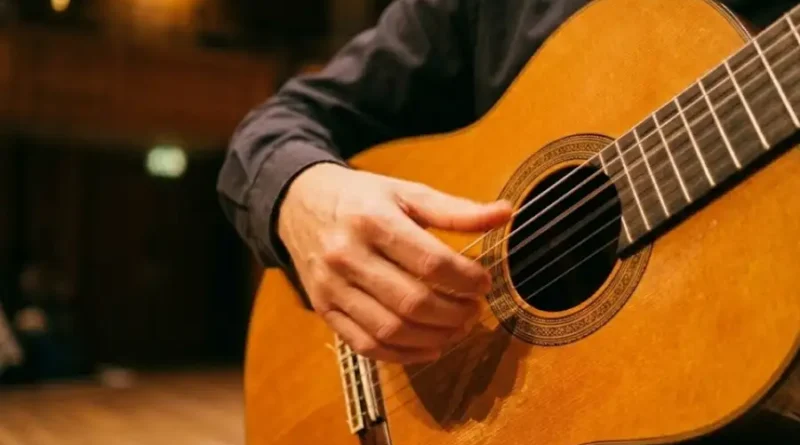
In classical and flamenco guitar, pulsamento refers to the technique of plucking individual strings one at a time with your fingertips.
Here’s what that means in simple terms.
When a guitarist strums a chord, they sweep their hand across several strings at once. You get a full, rich sound. But when a guitarist uses pulsamento, they use individual fingers to pluck one string at a time. Each note is clean, separate, and clear.
The movement comes from the large knuckle of the finger. The finger pushes through the string instead of just pulling it. This gives each note a warm, round, deliberate sound.
It’s the difference between painting a wall with a roller (strumming) and painting a detailed portrait with a small brush (pulsamento).
Pulsamento in Classical Guitar
Classical guitar players use pulsamento constantly. It’s the foundation of how they play scales and melodies.
The legendary guitarist Andrés Segovia had taken this technique further than almost anyone before him. When you listen to his recordings, every single note sounds like it was placed with care. Each one has warmth and life. That precision is pulsamento at its finest.
Classical guitarists often do something impressive with this technique. They play a bass note on a low string with their thumb while their other fingers pluck the melody on higher strings. It sounds like two instruments playing at once. Pulsamento makes that possible.
Pulsamento in Flamenco Guitar
In flamenco music, pulsamento plays a different but equally important role.
Flamenco guitar has a technique called rasgueo (or rasgueado). That’s the fiery, explosive strumming you hear that sounds almost like drumming. It’s loud, fast, and full of energy.
Pulsamento is the opposite of rasgueo.
Where rasgueo sweeps across all the strings at once, pulsamento picks them one by one. This contrast is what gives flamenco its incredible emotional range. A flamenco guitarist moves between crashing rasgueo and delicate pulsamento to take the listener on a ride, from intensity to tenderness and back again.
Paco de Lucía, one of the greatest flamenco guitarists who ever lived, was famous for this balance. His playing could feel like a storm one moment and a whisper the next.
Pulsamento in Your Body
Here’s something kind of amazing. You don’t need a guitar to experience pulsamento. Your body is already doing it.
Your heartbeat is pulsamento. It contracts, relaxes, contracts, relaxes, without stopping. Medical professionals monitor this rhythm to check your health. When the rhythm is steady, you’re doing well. When it becomes irregular, something is off.
Your breathing is pulsamento. Every breath follows a pattern: inhale, pause, exhale, pause. Repeat. That rhythm affects your stress levels, your focus, and your energy.
Your brain waves are pulsamento. Neurons in your brain send electrical signals in rhythmic waves. Different wave frequencies are linked to different states, like sleep, focus, creativity, and calm. When you meditate or breathe slowly, you’re slowing your brain’s pulsamento down on purpose.
This is why slow, rhythmic music can calm you down. Your nervous system naturally tries to match the rhythm it hears. When the music slows, your heartbeat and breathing slow with it.
Pulsamento in Nature
Once you know what pulsamento means, you start seeing it everywhere.
Ocean waves roll in and pull back. Roll in and pull back. That’s pulsamento.
The seasons cycle from warm to cold to warm again, year after year. That’s pulsamento.
Day and night follow each other in a 24-hour rhythm your body is tuned to. That’s pulsamento too.
Even stars pulse. Some stars brighten and dim in regular cycles. Astronomers use those rhythms to measure distances across the universe.
Nature runs on rhythm. Pulsamento is just the word for it.
Why Does This Matter to You?
You might be thinking: “Okay, interesting. But why should I care?”
Fair question. Here’s the straight answer.
If you play guitar, understanding pulsamento as a technique will change how you practice. You’ll stop just strumming and start thinking about the quality of each individual note. That’s what separates a beginner from a guitarist who makes people stop and listen.
If you love music, knowing about pulsamento will change how you hear it. You’ll start noticing that underlying pulse in every song. You’ll hear it in jazz, in classical pieces, in the drums of a pop song, in the bass of an electronic track. Music becomes richer when you understand its heartbeat.
If you’re interested in wellness, paying attention to your own rhythms can genuinely help. Syncing your breathing to a slow, steady beat (like in meditation or yoga) activates your nervous system’s calm mode. It reduces stress and helps you focus. You’re basically using your body’s natural pulsamento to your advantage.
If you’re a writer or creator, rhythm matters in your work too. The best sentences have a beat. The best stories have a pulse. The idea of pulsamento can help you think about flow, timing, and pacing in whatever you create.
Quick Summary: All the Meanings at a Glance
| Context | What Pulsamento Means |
|---|---|
| Italian Language | Pulsation, rhythmic beating |
| Music Theory | The steady underlying beat of a composition |
| Classical Guitar | Right-hand plucking of individual strings |
| Flamenco Guitar | Single-note technique (opposite of rasgueo) |
| Human Biology | Heartbeat, breathing, brain waves |
| Nature | Ocean waves, seasons, day/night cycles |
FAQs
Is pulsamento a music genre?
No. Pulsamento is not a genre. It’s an Italian word meaning pulsation. In music, it describes the steady underlying beat or a specific guitar technique. Some websites describe it as a genre, but that’s inaccurate.
Is pulsamento the same as strumming?
Not quite. Strumming sweeps across multiple strings at once to create a chord sound. Pulsamento in the guitar sense means plucking individual strings one at a time for clean, separate notes. They’re both useful, but they sound very different.
Do I need a special guitar to practice pulsamento?
No. You can practice pulsamento on any guitar. However, classical guitars with nylon strings are the most popular choice because they produce a warm, clear tone that suits the technique well.
How long does it take to learn pulsamento on guitar?
You can learn the basic motion in a few practice sessions. Getting it to sound clean and musical takes weeks to months of regular practice. Guitarists spend years refining it, because the small details of touch and timing make a big difference.
Why do so many websites describe pulsamento differently?
Because “pulsamento” is a low-competition keyword that attracted a lot of content farm articles. Many of those articles invented definitions to make the word sound more interesting. The accurate definition is simpler: it’s an Italian musical term meaning pulsation, with a specific use in guitar technique.
Can pulsamento help with stress?
In a sense, yes. The concept of pulsamento (steady, rhythmic patterns) is the basis for many relaxation techniques. Slow breathing exercises, meditation, and rhythmic music all use consistent rhythms to calm the nervous system. So while “pulsamento” itself isn’t a therapy, the idea behind it is genuinely used in stress reduction.
What’s the difference between pulsamento and rasgueo?
Pulsamento plucks individual strings one at a time for a soft, clear sound. Rasgueo (or rasgueado) strums aggressively across all strings for a loud, percussive sound. In flamenco guitar, players use both techniques in the same piece to create contrast and emotion.
The Bottom Line
Pulsamento is a beautiful word for a simple idea.
It’s the ongoing beat. The steady rhythm. The pulse that keeps everything moving.
You hear it in music. You feel it in your heartbeat. You see it in ocean waves. You play it on a guitar.
It’s not complicated. It’s not mysterious. It’s just rhythm, the most natural thing in the world.
And now that you understand it, you’ll start noticing it everywhere. In the song playing in your headphones. In your own breathing. In the way a great guitarist makes every note feel alive.
That’s the power of pulsamento. Once you feel it, you can’t unfeel it.
Did you find this article helpful? Share it with a friend who loves music, or someone who was just as confused about this word as you were.
Visit the rest of the site for more interesting and useful articles.
