
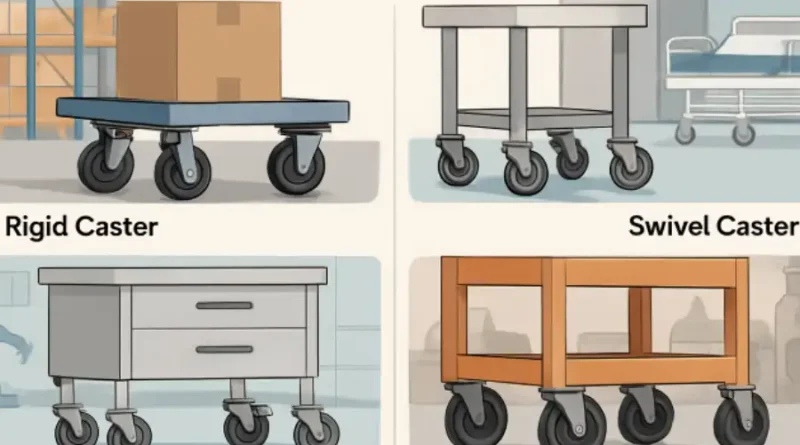
How Industrial Casters Are Transforming Modern Material Handling
Introduction
Industrial casters are the unassuming wheels at the heart of safe, efficient movement in warehouses, hospitals, factories, and many modern workplaces. Far more than simple mobility tools, casters play a critical role in streamlining operations and boosting productivity. Today, innovations in caster design have led to specialized solutions, such as medical casters, that cater to the needs of hospitals and laboratories, reducing noise and facilitating infection control.
The importance of casters in material handling can hardly be overstated. Because equipment, supplies, and heavy materials need to be moved quickly and safely, the right caster can prevent damage, reduce injury rates, and improve operational flow. Whether in a high-tech manufacturing plant or a bustling healthcare facility, the right caster technology bridges the gap between efficiency and reliability.
One of the reasons industrial casters continue to gain prominence is their ability to adapt to the evolving industrial needs of Europe and North America. Engineers and safety experts now recognize that easily movable equipment increases both worker enthusiasm and safety, thereby directly impacting workplace outcomes, as highlighted in the Britannica overview of materials handling.
As companies strive to lower operational costs and extend the lifespan of their infrastructure, advanced caster solutions have become a cornerstone of efficient logistics. Their integration with modern manufacturing systems is now seen as essential for scaling production and improving flexibility.
Advancements in Caster Technology
Over recent years, advances in caster technology have led to significant improvements in load-bearing capacity, noise reduction, and mobility. Today’s industrial casters are crafted from high-performance materials such as polyurethanes and reinforced nylons, offering long-lasting performance and robustness under heavy loads. These advancements minimize floor wear, decrease maintenance frequency, and enable smooth movement even over uneven surfaces.
Modern caster wheels now often feature high-precision ball bearings, reducing resistance and making the transportation of goods safer and less physically taxing. Moreover, technological breakthroughs have paved the way for integrating sensors and Internet of Things (IoT) capabilities. These “smart” casters provide real-time usage data, track asset locations within extensive facilities, and can even help schedule predictive maintenance before problems develop, reducing downtime and costs for businesses.
The introduction of air casters has been particularly game-changing. Air casters distribute the weight of heavy loads across a cushion of air, allowing you to glide massive machinery or sensitive equipment with minimal effort. This technology is especially valuable for applications where traditional wheels would struggle or risk damaging the floor, showcasing the diversity and sophistication of today’s caster solutions.
Industry-Specific Applications
Each industry faces distinct challenges that require tailored caster solutions. In healthcare, casters must maintain strict hygiene standards and minimize noise. Specialized options, such as antimicrobial wheels and soft treads, help prevent the spread of germs while ensuring patient comfort. The manufacturing sector relies on heavy-duty casters designed to withstand constant use, heavy equipment loads, and harsh environmental conditions. In the food processing industry, casters made from stainless steel, which are resistant to corrosive cleaning agents, enable frequent washdowns without degradation.
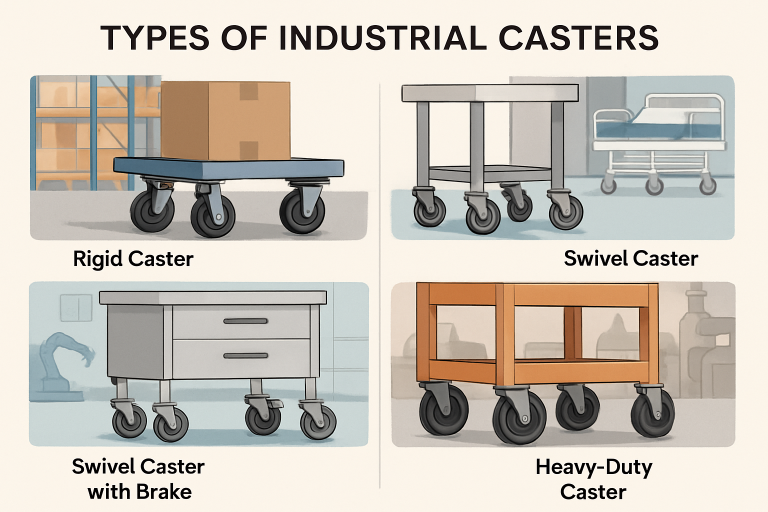
Logistics centers and warehouses benefit from casters that offer both heavy load capacity and directional control. Solutions such as locking mechanisms and swivel designs enhance stability, ensuring safe, accurate maneuvering in confined aisles. Furthermore, smart casters equipped with tracking and monitoring technology are gaining ground in high-value asset management, enabling businesses to achieve greater oversight and control over inventory movement.
Enhancing Safety and Ergonomics
Workplace injuries linked to manual material handling are a significant concern across industries. The latest industrial casters are specifically engineered to address these risks. Features such as low-resistance wheels, precision bearings, and ergonomic handle integrations dramatically reduce the physical effort needed to move carts, beds, or machinery. This not only safeguards employee well-being but also enhances productivity by minimizing fatigue and downtime.
Occupational safety guidelines, such as those supported by the U.S. Occupational Safety and Health Administration (OSHA), emphasize the importance of reducing pushing and pulling forces. Choosing the correct caster type is a straightforward yet highly effective way for employers to comply with safety standards while maintaining efficient workflows. Adjustable casters and advanced locking mechanisms offer added safety by stabilizing loads during transit or when stationary.
Protecting Factory Floors
Factory floors are among an operation’s most significant investments, and damage from improper caster use can be costly to repair. Innovations such as air casters are designed to distribute equipment weight evenly, preventing point loading that can gouge or scratch floors. Polyurethane wheels, known for their non-marking properties, are now a standard in facilities that prioritize both floor protection and ease of movement.
When moving sensitive or expensive equipment, reducing vibration and abrasion is key. Modern casters with shock-absorbing features or pneumatic tires offer excellent protection for both floors and equipment. Businesses that invest in such technology benefit from reduced long-term costs, fewer flooring repairs, and smoother overall operations.
Integration with Modern Manufacturing
Flexible manufacturing processes demand quick adaptability, especially as product lines change to meet shifting consumer demands. The latest casters are designed to complement and enhance lean manufacturing approaches by enabling rapid reconfiguration of assembly lines and workstations. Air casters facilitate the effortless movement of large, awkward machinery, supporting agile production layouts and minimizing downtime during changes.
Modern casters are increasingly compatible with automation systems and robotics. Their ability to interface with warehouse management software, operate autonomous vehicles, and provide real-time location data underscores the importance of choosing advanced mobility solutions to keep pace with digital transformation in manufacturing.
Conclusion
Industrial casters have evolved from simple wheels to vital components shaping the future of material handling. Their evolving features, ranging from advanced materials and sensor integration to specialized designs for different sectors, make them indispensable for organizations seeking to improve safety, efficiency, and adaptability. As industries continue to innovate, casters will remain at the forefront, quietly enabling the smooth flow of progress across every sector.
