
How Digital Solutions Are Shaping the Future of Everyday Life
Digital technology is fundamentally changing the way we live, reshaping how we communicate, work, manage our homes, and even care for our health. As these technologies become more deeply integrated into our routines, the benefits of having a trusted IT solution provider become increasingly clear for families, businesses, and communities looking to harness this transformation. From smart devices streamlining our environments to advanced tools supporting remote work, the digital shift affects almost every aspect of daily experience.
The pace of digital solutions’ advancement brings both unprecedented convenience and new challenges. The proliferation of smart home devices, artificial intelligence (AI) in the workplace, and telemedicine in healthcare highlights the positive impact of these technologies, while also underscoring the growing importance of digital inclusion to avoid widening social gaps. As we navigate this new landscape, the need for innovative thinking and reliable tech support has never been greater.
Digital Connectivity and Smart Homes
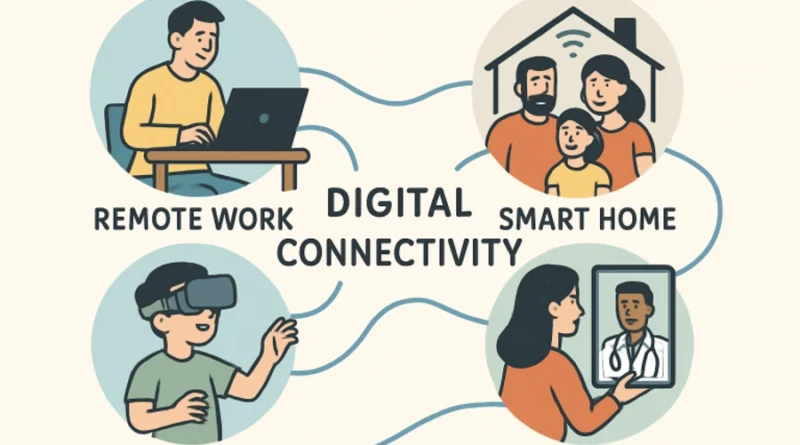
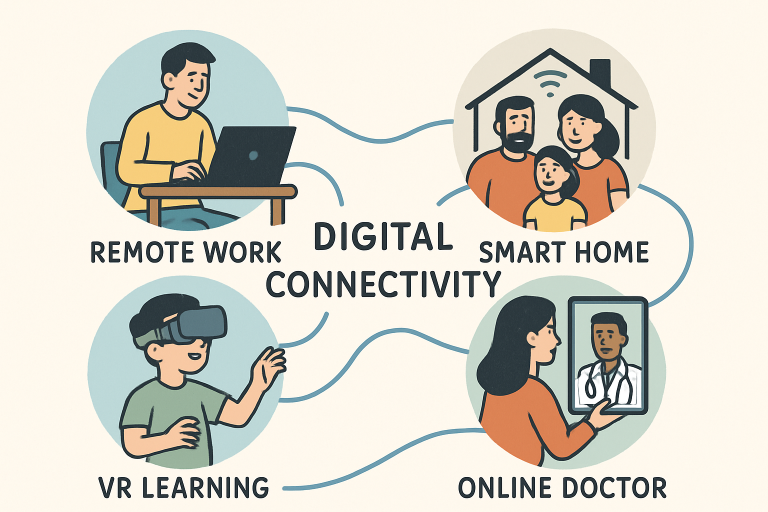
Modern homes are transforming, becoming smarter and safer thanks to widespread digital connectivity. Parents have more control than ever before, thanks to tools like connected smartwatches that help them track their children, set digital boundaries, and ensure online safety. Devices such as smart thermostats, video doorbells, and voice assistants are not only enriching homes with new possibilities but also contributing to a seamless, interconnected lifestyle. Nearly half of U.S. internet households use at least one smart home device, and the typical household has an average of 18 connected devices. This widespread adoption is creating new opportunities for families to stay safe, save energy, and simplify daily routines.
Augmented and Virtual Reality in Education
Augmented reality (AR) and virtual reality (VR) are moving far beyond their gaming origins, taking on vital roles in education and training. With immersive AR/VR tools, students can explore virtual field trips, medical students can practice surgeries in risk-free environments, and employees can train on complex machinery without physical risk. These technologies create deeper engagement, improved retention, and greater hands-on learning, regardless of geographic barriers. The evolution of AR and VR is enabling schools, universities, and corporations alike to offer unparalleled educational experiences and bridge learning gaps in innovative ways.
AI-Powered Tools in the Workplace
Artificial intelligence is at the forefront of the next workplace revolution. Businesses are using AI-driven software to automate repetitive tasks, analyze massive datasets, and identify patterns too subtle for human analysis. AI-powered chatbots provide instant customer support, while smart scheduling assistants and tools enhance creativity and collaboration among remote teams. Virtual reality workspaces enable distributed teams to collaborate in real time, challenging the very notion of what an office is. These digital tools are streamlining processes, boosting productivity, and allowing employees to focus on higher-value work.
Advancements in Digital Health
The integration of digital health solutions is improving access to, affordability of, and personalization in healthcare. Wearable technologies monitor heart rate, sleep cycles, and physical activity in real time, providing individuals and healthcare professionals with actionable insights into patient well-being. Telemedicine has surged in popularity, enabling patients to consult with doctors from the comfort of their own homes, an invaluable tool for those in rural or underserved areas. These advances mean earlier interventions, better outcomes, and more efficient use of healthcare resources.
Importance of Digital Inclusion
While digital solutions offer tremendous advantages, access to these technologies remains uneven across communities and populations. Digital inclusion focuses on removing obstacles such as high costs, limited connectivity, and gaps in digital literacy that prevent individuals from fully engaging in the digital landscape. Governments, nonprofits, and private organizations are increasingly collaborating to expand access to affordable devices, strengthen broadband infrastructure, and deliver practical digital skills training. As online connectivity becomes essential for education, healthcare, and employment, advancing digital inclusion has emerged as a critical priority in social and economic policy.
As the digital revolution accelerates, the combined impact of connectivity, innovation, and equitable access will shape how technology influences everyday life. Digital solutions are helping families feel more secure, empowering students and professionals to succeed, and expanding access to quality healthcare. At the same time, these advances underscore the importance of ensuring that everyone has the resources and opportunities needed to thrive in an increasingly connected world.
Visit the rest of the site for more interesting and useful articles.
