
Future Trends in Healthcare Spaces: Designing for Privacy and Infection Control
As healthcare spaces adapt to shifting demands, architects and facility managers are focusing on two foundational elements: protecting patient privacy and elevating infection control. These guiding principles underlie every aspect of current and future healthcare design, shaping environments that are not only compliant with rigorous standards but promote genuine well-being. From reimagined wards to new protocols for shared spaces, modernization efforts are rewriting what patients, caregivers, and administrators expect. Elements such as improved waiting rooms, smarter layouts, and innovative privacy solutions, including hospital cubicle curtains, are crucial to the next generation of hospitals and clinics.
As personal comfort, dignity, and safety continue to drive the evolution of healthcare interiors, thoughtful use of materials and technology becomes essential. Whether a patient is in a bustling emergency department or a long-term care suite, integrated design solutions are changing the experience of both care providers and recipients. Flexibility, cleanliness, and emotional comfort are now equally important design goals.
Flexible Spaces for Enhanced Privacy
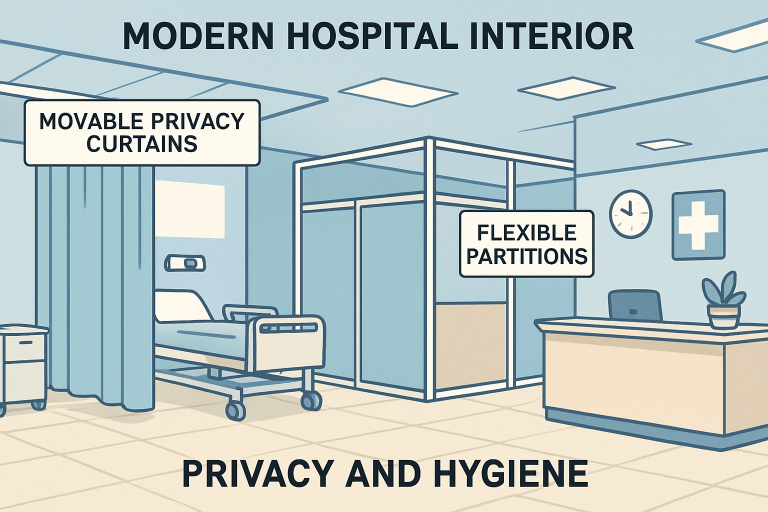
Rigidity is giving way to adaptability throughout modern healthcare environments. Where once patient rooms, consultation areas, and waiting zones were fixed, today’s facilities are trending toward configurable layouts. Modular partitions, reconfigurable furniture, and zoning with acoustic buffers empower providers to optimize privacy for each patient and situation. For example, larger waiting areas can be rapidly subdivided for family group privacy or expanded as needed, reflecting a distinct step away from the one-size-fits-all approach of the past. This emphasis on flexibility is not only practical but is recommended by groups like the American Institute of Architects, which advocates for privacy-centric designs as core to patient safety and satisfaction.
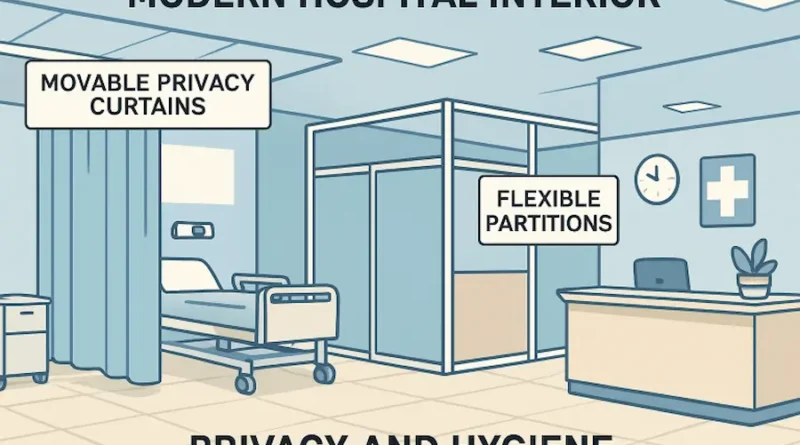
These adaptive approaches enable health institutions to address the diverse needs of their communities more effectively. The use of flexible elements such as movable walls, adaptable examination pods, and personalized privacy barriers offers staff more tools than ever before to create safe, respectful surroundings. Hospital cubicle curtains, for example, are now custom-fitted to blend seamlessly into varied color palettes and layouts, providing both privacy and infection control benefits within shared spaces.
Advanced Materials for Infection Control
Nowhere is the importance of purposeful design more apparent than in the choice of building finishes and surface materials. Intensive research—and the lasting impact of recent global health events—underscore the necessity of materials that both limit microbe survival and minimize maintenance downtime. Solutions like copper alloys and high-performance antimicrobial coatings are increasingly specified for high-touch zones. Meanwhile, flooring, wall surfaces, and even textiles are thoroughly examined for their role in preventing infections. This trend is reinforced by protocols from the Centers for Disease Control and Prevention, which emphasize the importance of surface materials that are easily cleaned and help reduce cross-contamination.
Air quality is also pivotal. Health systems are investing in hospital-grade filtration and air purification, leveraging technologies like UV-C disinfection, HEPA filtration, and negative pressure systems to mitigate the spread of airborne infections. Designing for infection control is not simply a precaution; it is foundational to operating a modern, safe healthcare facility.
Integration of Smart Technologies
The integration of technology goes well beyond IT infrastructure. Healthcare spaces are rapidly adopting Internet of Things (IoT) sensors and artificial intelligence (AI) to predict care needs, monitor environmental factors, and enhance both infection control and privacy. Patient rooms now routinely include motion sensors, fall detection systems, and real-time analytics that alert staff to emergencies or hygiene lapses. Smart windows can switch from clear to opaque on demand, providing effortless privacy in recovery suites, while automated entry systems reduce touchpoints and optimize traffic flow.
As medical devices become more interconnected and data-driven, privacy protocols grow increasingly sophisticated. The use of encrypted wireless networks, digital access controls, and facial recognition ensures only authorized personnel have access to sensitive spaces or patient information, thus safeguarding privacy at every touchpoint. These advances are already in deployment in some leading-edge clinical settings.
Emphasis on Emotional Well-being
Wellness extends beyond preventing infection and ensuring confidentiality; it also includes emotional and psychological comfort. Architecture and interior design teams are increasingly employing evidence-based design techniques that enhance healing through visual and sensory experiences. Drawing from biophilic design, natural daylighting, and organic materials, modern healthcare environments are crafted to restore and calm. Colors inspired by nature, indoor greenery, and tranquil artwork are proven to help reduce anxiety and accelerate recovery. These concepts are endorsed by both mental health and design researchers.
Design interventions that support wayfinding, such as clear paths, ample signage, and visual cues, further alleviate stress for patients and visitors. These strategies promote a sense of control and safety, aligning with the overall mission of healthcare institutions to deliver comprehensive care.
Onstage/Offstage Design for Better Privacy
Borrowing from hospitality and even entertainment venues, healthcare designers are increasingly employing the concept of “onstage” and “offstage” zones. In this model, onstage spaces and public areas, such as lobbies and corridors, are designed to be welcoming, peaceful, and restorative, emphasizing natural light, comforting textures, and clear sightlines. Offstage areas, meanwhile, are strictly functional zones designated for staff workflow, logistics, and support services, intentionally out of public view. This helps maintain the dignity and privacy of patients as well as a more organized care environment. The onstage/offstage division is highlighted in healthcare design research and aligns with recommendations from influential industry think tanks.
Decentralized Workstations for Enhanced Efficiency
The evolution away from centralized nurse stations toward smaller, decentralized pods distributed throughout units is another major trend in healthcare architecture. This distributed design offers several advantages. Care staff have immediate access to patients and equipment, which reduces travel times and improves both responsiveness and care delivery. Visual monitoring is improved, privacy interruptions are minimized, and workflow inefficiencies are addressed. According to studies by the Healthcare Facilities Symposium, decentralized workstations can directly contribute to improved clinical outcomes and higher patient satisfaction.
By embedding smaller hubs for documentation, hand-washing, and supplies near care rooms, modern facilities optimize both the efficiency of care delivery and overall privacy, further reinforcing infection control protocols as staff remain closer to the point of care.
Conclusion
Healthcare spaces are transforming with a clear goal: to protect privacy and prevent infection while fostering healing and comfort for all who enter. Through flexible layouts, innovative materials, smart technologies, and carefully curated environments, hospitals and clinics are not only addressing today’s challenges but also future-proofing care for generations to come. The most successful designs strike a balance between cutting-edge solutions and human-centric principles, ensuring that safety, dignity, and well-being are always at the center of healthcare delivery.
Visit the rest of the site for more interesting and useful articles.
