
Innovative Technologies Aiming to Eliminate Drunk Driving
Drunk driving remains a significant threat to public safety, contributing to numerous roadway fatalities in the United States and beyond. Addressing this critical issue requires bold action, and technology is emerging as a powerful ally. Tools like the Ignition Interlock Device are playing an increasingly important role in preventing individuals with impaired driving abilities from operating their vehicles.
Combating alcohol-related crashes necessitates collaboration between lawmakers, auto manufacturers, and tech innovators. Recent years have witnessed a surge in advanced systems designed to detect impairment before drivers take to the road, marking a new era in traffic safety. Legislation is shaping standards, while the automotive industry develops crucial prevention technologies that promise to transform the future of driving for everyone on the road.
Legislative Initiatives
In an unprecedented move, the U.S. Congress enacted the Infrastructure Investment and Jobs Act in 2021. This legislation instructs the National Highway Traffic Safety Administration (NHTSA) to establish new standards, requiring all new passenger vehicles to be equipped with advanced technology to prevent drunk and impaired driving. Setting this requirement at the federal level paves the way for widespread, systemic change, making impaired driving prevention an integral aspect of vehicle safety rather than an aftermarket solution.
By mandating technological safeguards, lawmakers have signaled a national commitment to reducing alcohol-impaired crashes and fatalities. The hope is that, over time, these measures will help save thousands of lives and encourage manufacturers to prioritize safety and innovation in tandem. According to the Associated Press, these upcoming standards are expected to accelerate the integration of impaired driving prevention into the national car fleet by the late 2020s.
Automotive Industry Efforts
The automotive sector has responded with urgency and ingenuity. Major manufacturers have formed consortia to pool resources and expertise, focusing on the research, testing, and rollout of robust technologies that can detect impairment preemptively. Their cooperative approach involves not only traditional automakers but also cutting-edge technology firms, making impaired driving detection a shared priority across the industry.
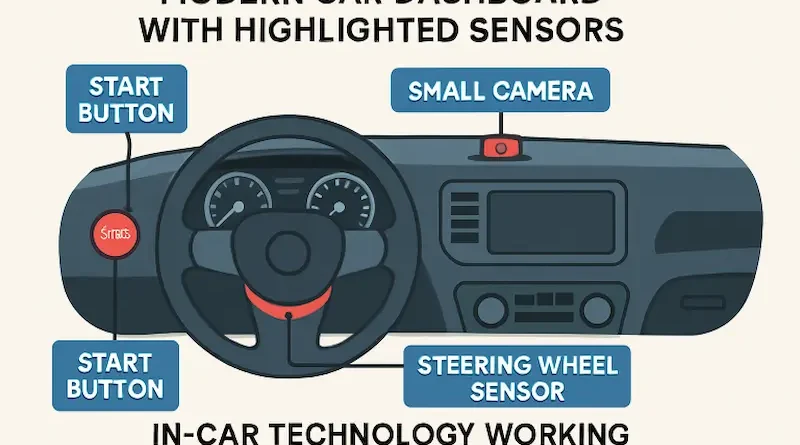
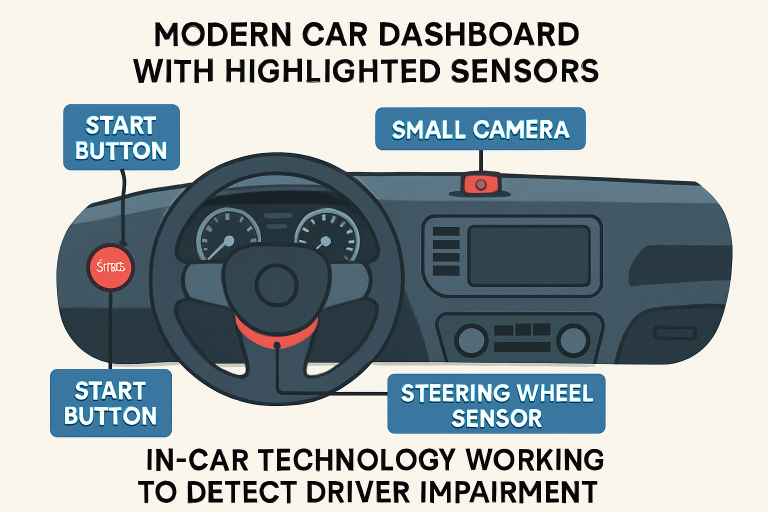
Among the most advanced solutions under development are in-vehicle sensors that continuously measure physiological and behavioral cues. Touchpads built into car start buttons, breath sensors, and monitoring cameras work together to assess a driver’s fitness to drive in real time. These efforts underscore a larger movement towards comprehensive road safety, closing the gap between detection and direct intervention.
For more information on industry leadership and collaborative projects, the Associated Press provides ongoing coverage of key partnerships and milestones within this rapidly evolving field.
Emerging Technologies
The arrival of sophisticated detection tools in new vehicles is fast approaching. Notable among them are:
- Driver Alcohol Detection System for Safety (DADSS): This groundbreaking project has developed breath and touch-based sensors that estimate a driver’s blood alcohol concentration (BAC) in real-time. Upon detecting BAC levels above the legal threshold, DADSS systems instantly prevent the vehicle from operating, thereby stopping impaired driving before it starts. For more details, please visit the DADSS official website.
- In-Vehicle Monitoring Systems: Companies such as Magna and major Tier 1 suppliers are pioneering vision and infrared sensor platforms. These can monitor facial cues, pupil responses, and exhaled breath for alcohol markers, seamlessly integrating impairment detection without demanding specific actions from the driver.
As adoption grows, these technologies are being fine-tuned for speed, accuracy, and resistance to tampering—ensuring reliable function while respecting driver convenience.
State-Level Implementations
Technology test beds across the nation are critical for refining and mainstreaming these advanced systems. Several states, including Virginia, have launched “Driven to Protect,” a pilot program that brings DADSS prototypes into real-world fleet vehicles. These field tests are crucial for measuring effectiveness, addressing user experience challenges, and gathering public feedback before nationwide rollouts. More information is available on the DADSS Discovery Hub.
Similar pilot programs in states like Maryland have demonstrated how public-private partnerships can close the gap between lab innovation and everyday application, making communities safer while informing future regulation and product design.
Challenges and Considerations
As groundbreaking as the technology may be, several obstacles must be overcome to ensure long-term success:
- Privacy Concerns: Robust safeguards are necessary to ensure that data collected by these systems is used exclusively for their intended safety purposes, thereby avoiding potential misuse that could erode public trust.
- Accuracy and Reliability: False positives or negatives could result in frustration or, worse, dangerous oversights. Developers must validate and rigorously test all technologies to ensure flawless performance in diverse, real-world situations.
- Public Acceptance: Successfully rolling out these solutions depends on public confidence and trust. Education campaigns, transparency about system functionality, and responsive support services are crucial for building user trust and achieving widespread adoption.
Future Outlook
The vision of a future free from drunk driving fatalities is within reach. As legislation aligns with technological innovation and the broader transportation industry invests in new safety tools, the path forward becomes clearer. Continued cooperation among policymakers, carmakers, and communities is crucial to ensure these systems are practical, effective, and widely adopted.
Reliable drunk driving prevention technology is poised for nationwide implementation. As these systems become standard equipment in new cars, the U.S. could see a dramatic reduction in alcohol-related crashes, changing lives and saving countless others. To stay informed about the latest trends and legislative actions, resources offer ongoing updates and expert insights.
