

Skills Required for a Contract Legal Assistant: Your Essential Career Roadmap
Introduction
You’re reviewing a contract with critical renewal dates, complex payment schedules, and dozens of obligation threads. Missing one detail costs the company $2 million. This is the reality contract legal assistants face daily—and it’s precisely why the skills required for this role extend far beyond what most job descriptions capture.
The contract legal assistant role sits at the intersection of legal precision and operational excellence. Unlike general legal assistants who support diverse practice areas, contract legal assistants specialize in the contract lifecycle—from drafting through performance monitoring. This specialization demands a unique skill blend that combines technical legal knowledge with technological proficiency and strategic thinking.
The Bureau of Labor Statistics reports that legal assistant roles are growing, but contract-specific positions command premium opportunities and earning potential. Yet most aspiring professionals underestimate the skill gaps between theory and practice. This guide bridges that gap, revealing the hard and soft skills that actually matter—and how they translate into real contract work scenarios.
The Contract Legal Assistant Role: Defining Your Niche
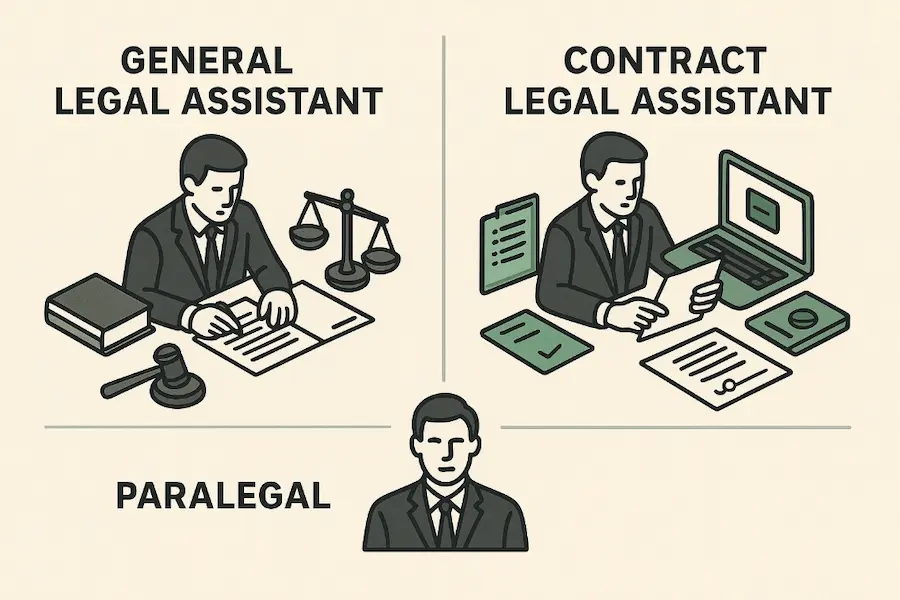
Before diving into specific skills, clarify what separates contract legal assistants from related roles. Paralegals conduct broader legal research and case management across practice areas. General legal assistants provide administrative support. Contract legal assistants, however, specialize in contract creation, negotiation support, obligation tracking, and compliance monitoring throughout the contract lifecycle.
This distinction matters because it fundamentally shapes your skill priorities. While a general legal assistant might focus on filing and scheduling, a contract legal assistant must understand how contract terms translate into business obligations, financial impacts, and compliance requirements.
Hard Skills: The Technical Foundation
Legal Research and Contract Analysis
Contract legal assistants must conduct precise legal research—but with contract-specific focus. Rather than broad case law research, you’re analyzing contract terms, identifying risks, and understanding how clauses interact. This requires familiarity with contract databases, precedent repositories, and understanding statutory requirements affecting contract validity.
The skill involves more than reading contracts. You must extract obligations from dense legal language, identify renewal triggers, recognize non-standard clauses that deviate from your organization’s templates, and flag compliance concerns. This extraction layer is critical—research shows that contract obligation leakage costs enterprises significant revenue, and your precision directly prevents those losses.
Legal Writing and Document Drafting
Contract legal assistants must write with surgical precision. A misplaced comma, inconsistent defined term, or vague obligation description can trigger disputes worth millions. You’ll draft contract sections, amendment language, and approval memoranda that must withstand legal scrutiny.
Beyond writing mechanics, this skill includes understanding contract drafting best practices—clause hierarchy, cross-reference management, and consistency standards. You’re not just composing language; you’re building documents that accurately reflect business intent and minimize ambiguity.
Technical Proficiency in CLM Tools
Modern contract work is inseparable from technology. You must master CLM tools that automate obligation extraction, track contract performance, manage redlining workflows, and generate compliance reports.
This isn’t optional IT competency—it’s a core legal skill. Understanding how legal automation features work directly impacts your efficiency and error rate. The ability to configure workflows, interpret system-generated obligation reports, and troubleshoot integration issues separates high-performing contract legal assistants from struggling ones.
Contract Terminology and Legal Concepts
You need working fluency in contract language: indemnification, force majeure, representations and warranties, material breach, notice provisions, and dozens of other terms that carry specific legal consequences. This isn’t vocabulary for vocabulary’s sake—each term represents distinct risk allocation and enforcement mechanisms.
Soft Skills: The Strategic Multiplier
Attention to Detail and Organizational Discipline
Contract management demands obsessive precision. Missed renewal dates cascade into operational failures. Inconsistent obligation tracking masks compliance violations. Misaligned financial terms trigger reconciliation nightmares.
This skill transcends perfectionism—it’s about systematic organization. Successful contract legal assistants build checklists, track document versions, maintain obligation calendars, and create redundant verification processes. You’re creating systems that make errors visible rather than relying on individual vigilance.
Communication and Stakeholder Management
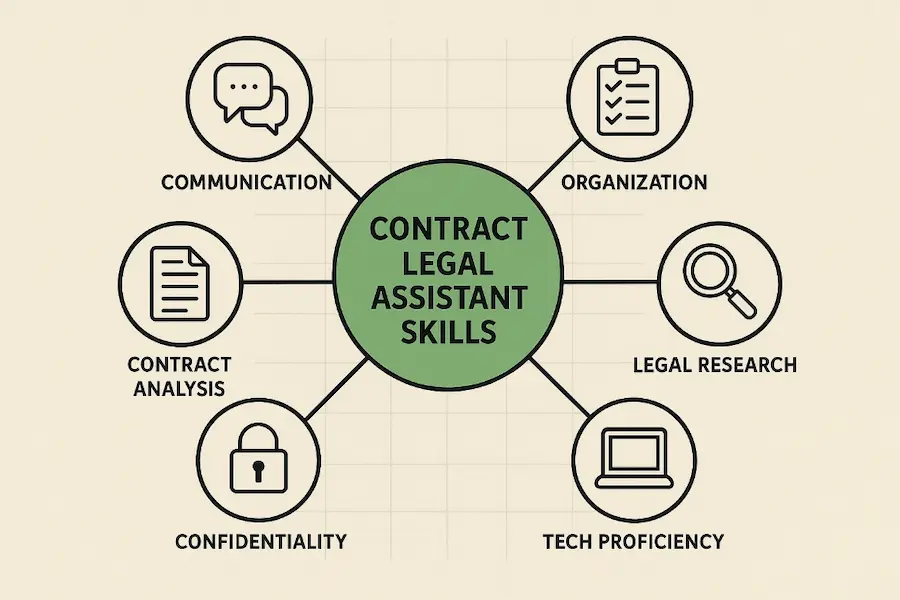
Contract work involves translating between technical legal language and business operations. You explain obligation consequences to procurement teams, clarify compliance requirements to finance, and help executives understand renewal implications. This demands clarity without oversimplification.
You’ll also manage contract negotiations where your role includes tracking redline history, summarizing open issues for legal review, and communicating counterparty positions clearly. Ambiguous communication in this context directly impacts deal outcomes.
Confidentiality and Ethical Judgment
Contract work involves proprietary business information—pricing, supplier relationships, strategic initiatives embedded in contract terms. You’ll handle confidential data daily and must understand contract compliance requirements, NDA obligations, and ethical boundaries.
This extends to judgment calls: knowing when to escalate concerns, recognizing potential conflicts of interest, and understanding when contract terms breach regulatory requirements. Ethics here isn’t abstract—it’s daily practice.
Advanced Competencies: The Competitive Edge
Obligation Management and Risk Recognition
Contract legal assistants increasingly manage obligations throughout the contract lifecycle. This means understanding how contractual commitments translate into operational tasks, tracking performance against service levels, and identifying when either party falls short. This skill bridges legal analysis with operational contract risk management.
You’re not just documenting obligations—you’re flagging risks before they materialize, ensuring renewal decisions happen before expiration, and monitoring performance metrics that indicate relationship health.
Cross-Functional Collaboration
Modern contract management requires coordinating with procurement, finance, operations, IT, and compliance. You translate between these functions, ensuring contracts reflect business requirements while meeting legal standards. This demands understanding how other departments view contracts and speak their language.
Successful contract legal assistants become operational translators—explaining why finance cares about invoice accuracy, why procurement needs clear acceptance criteria, and why compliance mandates specific audit provisions.
Building Your Skills: From Theory to Practice
Skill development progresses through stages. Early-career contract legal assistants focus on contract terminology, document formatting standards, and CLM tool navigation. Mid-level professionals deepen obligation analysis, risk identification, and stakeholder communication. Senior-level assistants drive process improvement, mentor junior staff, and influence contract strategy.
Each stage requires deliberate practice. Shadow experienced colleagues during negotiations. Review closed contracts to understand how terms evolved and why. Practice obligation extraction using contract management software until pattern recognition becomes automatic.
Seek feedback on your writing. Take specialized legal training on contract interpretation. Build networks with contract administrators to understand how your work impacts downstream contract management.
Job Search Strategy: Showcasing Your Skills
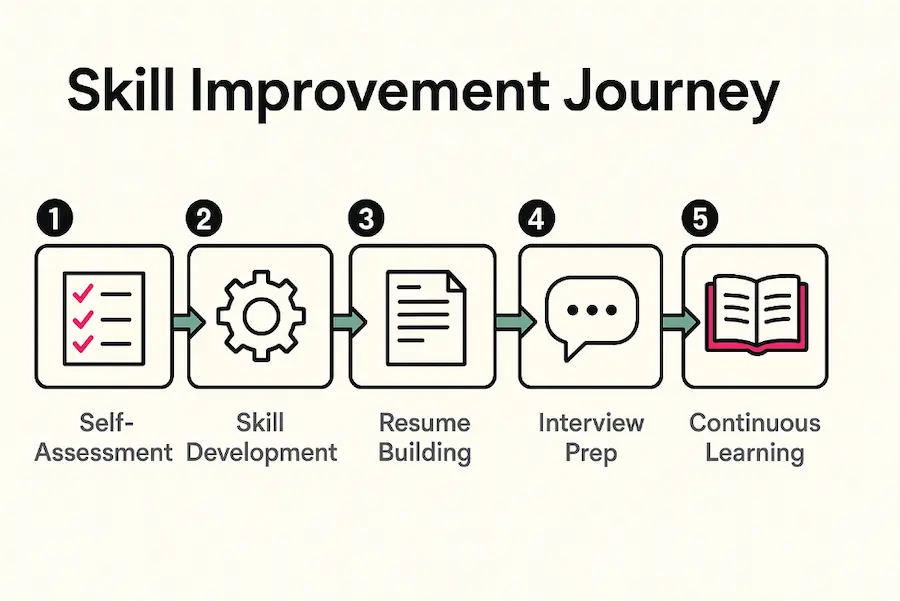
During interviews, move beyond listing skills to demonstrating them. When asked about attention to detail, describe a specific obligation you caught that prevented compliance violation. When discussing technical proficiency, explain how you leveraged CLM features to reduce contract cycle time.
Prepare concrete examples from projects or coursework showing contract analysis, writing, and problem-solving. Discuss how you’ve balanced accuracy with efficiency—a key tension in contract work.
Conclusion
The skills required for contract legal assistants form an interconnected system. Technical legal knowledge enables precise contract analysis. Organizational discipline prevents critical misses. Stakeholder communication ensures your work translates into business impact. Technical proficiency with CLM tools multiplies your efficiency.
Master these skills deliberately. Start with fundamentals—contract terminology, document standards, basic CLM navigation. Progress to advanced work like obligation extraction and risk assessment. Build the soft skills that turn technical competence into organizational value.
The contract legal assistant role offers genuine career opportunity for professionals who develop these capabilities. Your precision prevents millions in losses. Your communication prevents disputes. Your judgment strengthens legal positions. These aren’t abstract skills—they’re the foundation of professional impact.
Next Step: Assess your current skill gaps. Identify one hard skill and one soft skill to develop this quarter. Seek mentorship from experienced contract professionals. Consider formal training in contract lifecycle management processes to understand how your role fits the broader system.
Frequently Asked Questions
What’s the difference between contract legal assistant skills and general legal assistant skills?
A: Contract legal assistants specialize in contract-specific obligations, compliance tracking, and lifecycle management. General legal assistants work across practice areas with broader administrative focus. Contract roles demand deeper technical knowledge of contract terms, obligation extraction, and contract risk management, while general roles emphasize scheduling and filing proficiency.
Do I need a law degree to become a contract legal assistant?
A: No. Most contract legal assistant roles require a paralegal certificate or Associate degree in paralegal studies, plus specialized contract training. However, some employers promote experienced administrative staff with demonstrated contract learning into these roles. Key differentiator: practical contract knowledge trumps formal credentials.
How important is CLM software proficiency for entry-level positions?
Increasingly critical. Most modern contract work uses contract management software for obligation tracking, compliance monitoring, and workflow automation. Entry-level positions increasingly expect basic software proficiency—ability to navigate systems, understand workflow logic, and interpret system-generated reports. This skill directly impacts hiring decisions and job performance.
Visit the rest of the site for more interesting and useful articles.
