

Building Your Brand: Essential Digital and Physical Marketing Strategies
Laying the Foundation: Defining Your Core Brand Identity
Before any visual elements are created or marketing campaigns are launched, a small business must first establish its core brand identity. This is the invisible blueprint that guides every decision, ensuring authenticity and resonance with your audience. It’s about understanding who you are, what you stand for, and why you exist.
Uncovering Your Brand’s Purpose and Values
At the heart of every strong brand lies a clear purpose and a set of unwavering values. Your purpose is the “why” behind your business – the problem you solve, the change you want to create, or the unique value you bring to the world. Your values are the guiding principles that dictate how you operate, interact with customers, and make decisions.
For small businesses, articulating these elements is particularly crucial. It helps you differentiate yourself from larger competitors and connect with customers on a deeper, more personal level. Consumers today are increasingly conscious of the brands they support; a significant 61% of global consumers say it’s important that a brand’s core values align with their own. Furthermore, 51% of global consumers say it’s very or extremely important for brands to give them a way to connect with those who share their values or lifestyle. This highlights the power of shared values in building strong customer relationships.
To define your purpose and values, ask yourselves:
- Why did we start this business? What problem were we trying to solve?
- What principles do we refuse to compromise on?
- What kind of impact do we want to have on our customers, our community, and the world?
- What emotions do we want our brand to evoke?
These answers will form the bedrock of your mission statement – a concise declaration of your business’s core purpose and aims. This statement should be more than just words; it should be a living document that informs your brand story and shapes every interaction.
Identifying Your Target Audience
You cannot effectively brand your business without a deep understanding of who you are trying to reach. Your target audience is not “everyone”; it’s a specific group of individuals who are most likely to need or want your products or services. Defining this group is paramount, as it dictates your brand’s messaging, tone, and even its visual aesthetics.
Start with thorough market research. This involves gathering data on demographics (age, location, income, education), psychographics (interests, hobbies, values, lifestyle), and behavioral patterns (buying habits, online activities). Create detailed buyer personas – semi-fictional representations of your ideal customers – to bring your audience to life. Give them names, backstories, and specific pain points your business can address.
Consider these questions:
- Who are our ideal customers? What are their daily lives like?
- What challenges do they face that our business can solve?
- Where do they spend their time online and offline?
- What kind of language do they use, and what messages resonate with them?
By understanding your target audience’s needs, desires, and pain points, you can tailor your brand messaging to speak directly to them, fostering a sense of connection and understanding. This targeted approach ensures your branding efforts are efficient and impactful, rather than broadly scattered.
Crafting a Compelling Brand Story and Voice
People connect with stories, not just products. A compelling brand story is the narrative that explains how and why your business came to be, what motivates you, and what values drive your operations. It’s an emotional connection that transforms transactional relationships into loyal partnerships. Your brand story is distinct from your origin story; while it might incorporate elements of your beginnings, its focus is on the ongoing journey and the relationship you build with your customers.
Your brand’s voice is the personality of your business, expressed through written and spoken communication. Is your brand witty and playful, serious and authoritative, empathetic and nurturing, or innovative and bold? This voice should be consistent across all platforms, from your website copy to your social media posts and customer service interactions. For example, a subscription-based shaving service like Dollar Shave Club uses a humorous and quirky tone to connect with its audience, making a mundane product memorable.
Authenticity is key here. Your brand story and voice should genuinely reflect who you are as a business. Don’t try to be something you’re not, as modern consumers are adept at spotting insincerity. Share your “why” – the passion and principles that drive you. This emotional resonance can turn a one-time buyer into a loyal customer, as they feel a personal connection to your journey and mission.

Designing Your Visual Identity: The Look and Feel of Your Brand
Once your core identity is defined, the next step is to translate it into a distinctive visual language. Your visual identity is often the first point of contact customers have with your brand, making it crucial for creating strong first impressions and ensuring instant recognition. Visual consistency across all touchpoints builds trust and reinforces your brand’s presence in the market.
Creating a Memorable Logo
Your logo is the cornerstone of your visual identity. It’s a symbol that encapsulates your brand’s essence, values, and personality in a single, memorable image. A well-designed logo should be:
- Simple: Easy to recognize and recall. Think of iconic logos like Nike’s swoosh or Apple’s bitten apple.
- Scalable: Effective across various sizes, from a tiny favicon on a website to a large billboard.
- Relevant: Appropriate for your industry and target audience.
- Versatile: Works well in different contexts and mediums (print, digital, black and white).
- Memorable: Unique enough to stand out from competitors.
While it might be tempting to create a logo yourself using free tools, investing in professional logo design can yield significant returns. A professionally crafted logo ensures quality, uniqueness, and adherence to design principles that might be overlooked otherwise. Your logo will represent your business for years to come, making it a critical investment.
Choosing Your Color Palette and Typography
Beyond the logo, your chosen color palette and typography play a massive role in shaping brand perception and communicating personality.
Color Psychology: Colors evoke specific emotions and associations. Understanding color psychology allows you to select hues that align with your brand’s message and resonate with your target audience.
- Red: Excitement, passion, urgency, energy (e.g., Coca-Cola, Netflix)
- Blue: Trust, professionalism, calmness, reliability (e.g., Facebook, IBM)
- Yellow: Optimism, warmth, cheerfulness, creativity (e.g., McDonald’s, National Geographic)
- Green: Nature, growth, health, tranquility (e.g., Starbucks, Whole Foods)
- Orange: Enthusiasm, creativity, friendliness, affordability (e.g., Fanta, Amazon)
- Purple: Luxury, royalty, wisdom, imagination (e.g., Hallmark, Cadbury)
- Black: Sophistication, power, elegance, formality (e.g., Chanel, Apple)
- White: Purity, simplicity, cleanliness, minimalism (often used as a background or accent)
Typography: The fonts you choose convey personality and impact readability. A bold, sans-serif font might suggest modernity and strength, while a delicate serif font could evoke tradition and elegance. Select fonts that are legible across all platforms and complement each other. Typically, a brand uses one primary font for headlines and another, more readable font for body text. Consistency in your font choices across all materials is vital for a polished and professional appearance.
The Importance of a Professional Visual Identity
A cohesive and professional visual identity goes beyond just a logo and colors; it encompasses all visual elements that represent your brand, including imagery, iconography, and overall design aesthetic. This holistic approach ensures that every visual touchpoint—from your website to your social media graphics and packaging—speaks the same brand language.
Professional visual identity design helps build credibility and trust with your audience. When your brand looks polished and thoughtfully designed, it signals attention to detail and a commitment to quality. This is particularly important for small businesses looking to compete with larger, more established players. Strong Small business visual branding helps you stand out in a crowded marketplace, making your brand instantly recognizable and memorable.

Activating Your Brand: Low-Cost Strategies for Small Business Branding
Building a strong brand doesn’t require an unlimited budget. Many effective strategies for increasing brand awareness and recognition can be implemented with minimal cost, relying more on creativity, consistency, and strategic effort. The key is to maximize every customer touchpoint and leverage readily available platforms.
Building an Unmissable Online Presence
Your online presence is often the first, and sometimes only, interaction a customer has with your brand. Making it “unmissable” involves strategic use of various digital channels.
- Social Media Strategy: Don’t just post; engage. Identify the platforms where your target audience spends the most time and tailor your content to fit each platform’s unique style. 77% of consumers prefer shopping with brands they follow on social media, highlighting the importance of an active and engaging presence. Use consistent visuals, brand voice, and messaging. Share behind-the-scenes content, customer testimonials, and interactive posts to build a community.
- Content Marketing: Become a thought leader in your niche. Create valuable content – blog posts, videos, infographics, podcasts – that addresses your audience’s pain points, answers their questions, or entertains them. This positions your brand as an expert and builds trust. A bakery, for example, could share how-to videos on bread making, attracting customers interested in the craft.
- SEO for Branding: Optimize your website and content for search engines. When potential customers search for products or services you offer, you want your brand to appear prominently. This involves using relevant keywords, creating high-quality content, and ensuring your website is technically sound.
- Email Marketing: Build an email list and regularly send newsletters, promotions, or valuable content. This allows for direct communication and nurtures customer relationships over time.
For small businesses, crafting a professional online presence is crucial. This often starts with a well-designed website that effectively communicates your brand story and offerings. Utilizing tools for low-code branding for small businesses can help create a professional digital storefront that is as impactful as your physical one, without requiring extensive technical skills.
Leveraging Partnerships and Community
Collaborating with others and fostering a sense of community can significantly amplify your brand’s reach without breaking the bank.
- Brand Collaborations: Partner with complementary businesses that share your target audience but offer non-competing products or services. This could involve co-hosting events, cross-promoting each other’s offerings, or even creating a unique co-branded product. For instance, a local coffee shop and a bakery could team up for a special breakfast bundle. These collaborations introduce your brand to new audiences who already trust your partner.
- Influencer Marketing: Work with micro-influencers or local personalities whose audience aligns with yours. Instead of large, expensive campaigns, focus on authentic partnerships where influencers genuinely love and promote your product or service. Product seeding (sending free products in exchange for honest reviews) can be a low-cost way to get your brand in front of new eyes.
- User-Generated Content (UGC): Encourage your customers to create and share content featuring your brand. This could be through contests, branded hashtags, or simply by reposting their content. UGC is highly authentic and acts as powerful social proof, building trust and credibility. Brands like Tower 28 have successfully leveraged UGC to showcase product effectiveness and drive organic growth.
- Community Building: Create spaces, both online and offline, where your customers can connect with each other and with your brand. This could be a private Facebook group, local workshops, or charity events. Building a community fosters loyalty and makes your customers feel like part of something bigger.
Integrating Branding into Every Customer Touchpoint
Every interaction a customer has with your business is an opportunity to reinforce your brand identity. These touchpoints extend beyond marketing materials to the entire customer experience.
- Custom Packaging: For product-based businesses, packaging is a crucial physical touchpoint. Even simple custom stamps, branded stickers, or personalized notes can lift the unboxing experience and leave a lasting impression. Consider how brands like Popcorn Shed use fun, playful packaging to evoke childhood magic and stand out.
- Branded Merchandise: Selling or giving away branded merchandise (t-shirts, mugs, tote bags) turns your customers into walking advertisements. It boosts brand awareness, encourages loyalty, and can even generate a small revenue stream. It acts as a mini-version of influencer marketing, with customers implicitly endorsing your brand.
- Customer Service Experience: Your brand values should be reflected in every customer interaction. A friendly, helpful, and efficient customer service experience reinforces a positive brand image. Zappos, for example, built its brand around exceptional customer service, making it a key differentiator.
- In-Store Design: If you have a physical location, ensure its ambiance, layout, and visual elements align with your brand identity. From the music playing to the scent in the air, every detail contributes to the overall brand experience.
- Business Cards and Stationery: Even traditional items like business cards should be consistent with your brand’s visual identity. They are often the first physical representation of your brand a potential customer receives.

Measuring and Maintaining Your Brand’s Health
Branding is not a one-time task; it’s an ongoing process that requires continuous attention, adaptation, and measurement. A strong brand is a living entity that evolves with your business and market demands.
The Critical Role of Consistency Across All Channels
Consistency is arguably the most important aspect of branding. It’s how your audience learns to recognize, trust, and remember you. Every time a customer encounters your brand, whether it’s on your website, a social media post, an email, or your product packaging, the experience should feel cohesive and familiar.
This means maintaining a consistent:
- Visual Identity: Use the same logo, color palette, and typography across all platforms.
- Brand Voice and Messaging: Ensure your tone and core messages are uniform, regardless of the channel.
- Values and Personality: Act in ways that consistently reflect your stated brand values.
Why is this so crucial? Because it takes time for a brand to register in a consumer’s mind. Research indicates that it takes between 5-7 impressions for users to become aware of your brand. If each impression presents a different version of your brand, you lose the opportunity to build recognition and trust. Develop a comprehensive brand style guide that outlines all these elements, and ensure everyone on your team adheres to it. This guide acts as the central source of truth for your brand, preventing inconsistencies and maintaining integrity.
How to Measure the Impact of Your Small business branding Efforts
While branding can feel qualitative, its impact can and should be measured. Tracking key metrics allows you to understand what’s working, what’s not, and where to adjust your strategy.
- Social Media Analytics: Most platforms offer built-in analytics that track engagement (likes, comments, shares), reach, follower growth, and audience demographics. Look for trends in how different types of content perform and how your audience responds to your brand voice.
- Customer Surveys and Feedback: Directly ask your customers about their perception of your brand. Use surveys to gauge brand awareness, brand loyalty, and how well your brand values resonate with them. Tools like SurveyMonkey or Google Forms can be used for free or low cost.
- Website Traffic Analysis: Tools like Google Analytics can show you how people are finding your website, which pages they visit, and how long they stay. An increase in direct traffic (people typing your URL directly) can indicate growing brand recognition.
- Brand Mentions and Sentiment: Monitor online conversations about your brand. Tools like Google Alerts or social listening platforms can help you track mentions across social media, news sites, and blogs. Analyze the sentiment of these mentions (positive, negative, neutral) to understand public perception.
- Sales Data: Effective branding should contribute to sales. Track sales growth, customer retention rates, and average customer lifetime value. While not a direct measure of branding alone, positive trends here often indicate a strong brand.
By regularly reviewing these metrics, you can refine your branding strategy, ensuring it remains relevant, impactful, and aligned with your business goals.
Frequently Asked Questions about Small Business Branding
What’s the difference between branding and marketing?
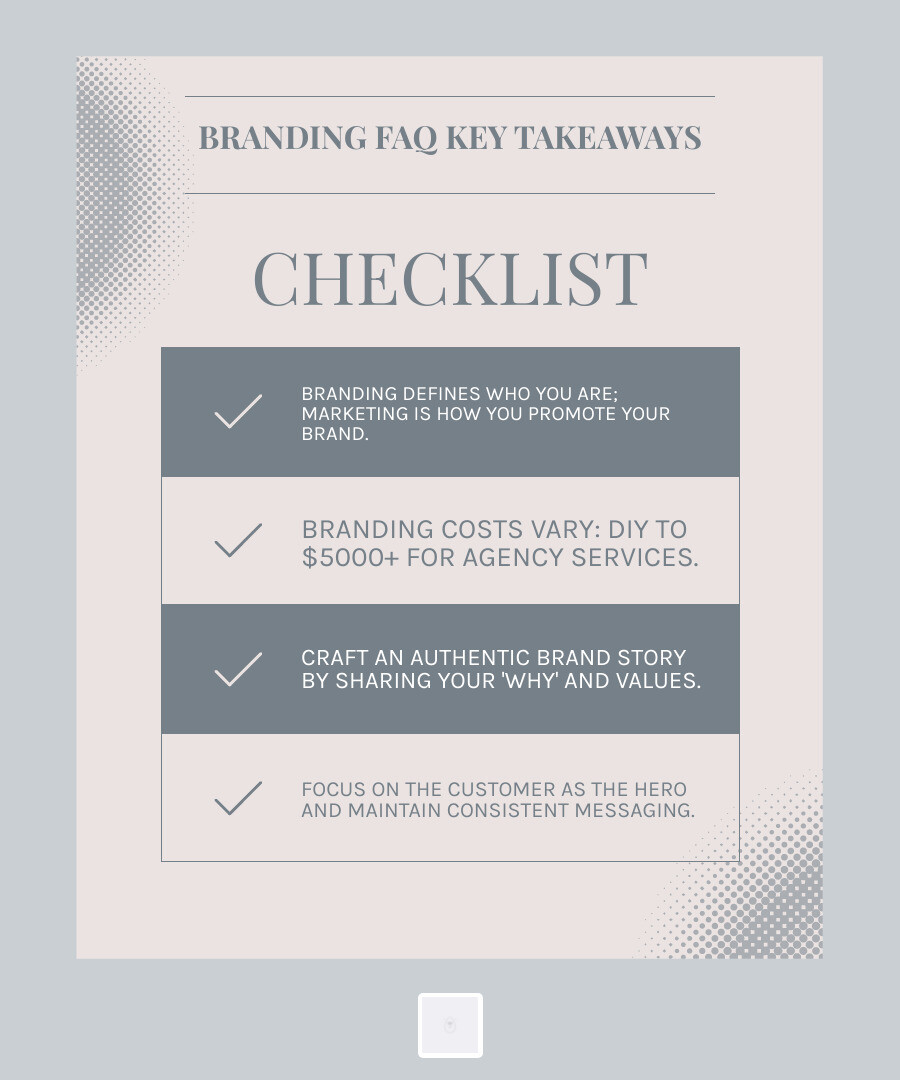
This is a common point of confusion for many small business owners. Branding is the long-term, strategic process of shaping your company’s identity, reputation, and how it’s perceived by the public. It defines who you are as a business – your purpose, values, personality, and the unique promise you make to your customers. It’s the foundation upon which all other business activities are built.
Marketing, on the other hand, consists of the tactical activities you use to promote your products or services, attract customers, and achieve short-term goals like increasing sales or generating leads. Marketing is how you communicate your brand to the world. Your brand guides your marketing efforts, ensuring that all promotional activities are consistent with your core identity and messaging. Think of it this way: your brand is your reputation, and marketing is how you earn it.
How much should a small business budget for branding?
The cost of branding for a small business can vary widely, from virtually nothing to several thousand dollars, depending on your approach.
- DIY Branding: If you have the time and some design savvy, you can leverage free online tools for logo creation, social media graphics, and website templates. This approach requires significant personal investment but minimal financial outlay.
- Freelance Designers: Hiring a freelance graphic designer for a logo can cost anywhere from a few hundred to a few thousand dollars, depending on their experience and the complexity of the design. A full brand identity package (logo, color palette, typography, basic style guide) from a freelancer might range from $1,000 to $5,000+.
- Branding Agencies: For a comprehensive branding strategy and execution, including market research, brand strategy development, and full visual identity creation, a branding agency will charge significantly more, typically starting from $5,000 and going upwards.
For most small businesses, the best approach is to focus on high-impact, low-cost strategies first. Prioritize defining your core identity, creating a simple yet effective logo, and ensuring consistency across your most visible touchpoints. As your business grows, you can gradually invest more in professional design and broader branding initiatives. Many of the strategies discussed in this guide emphasize creativity and strategic thinking over large budgets.
How can I create a brand story that connects with customers?
Creating a brand story that resonates deeply with customers requires authenticity and emotional appeal. Here’s how you can craft one:
- Be Authentic: Your story must be genuine. Don’t invent a narrative; instead, uncover the true essence of your business. What inspired you to start? What challenges did you overcome?
- Share Your “Why”: People are often more interested in why you do what you do than what you do. Explain the passion, purpose, or problem that drove you to create your business. For example, a coffee brand like Death Wish Coffee found its niche by focusing on the “strongest coffee” for those who truly need a jolt, rather than a family-friendly market.
- Highlight Your Values: Weave your core values into your narrative. If sustainability is important, show how it’s integrated into your operations. If community is key, tell stories of your local involvement.
- Focus on the Customer: Position the customer as the hero of your story. How does your business help them achieve their goals, solve their problems, or improve their lives?
- Show, Don’t Just Tell: Use vivid language, anecdotes, and even images or videos to bring your story to life. Share behind-the-scenes glimpses or testimonials from satisfied customers.
- Be Consistent: Tell your story consistently across all platforms: your website’s “About” page, social media posts, marketing materials, and even in how your staff interact with customers.
A compelling brand story doesn’t just sell products; it builds a community of loyal customers who believe in what you do and feel a personal connection to your journey.
Visit the rest of the site for more interesting and useful articles.
