
What Founders Expect as Europe’s Startup Market Matures
Europe’s startup scene feels different than it did a few years ago. The pace has slowed, conversations take longer, and optimism is being tested by reality. For founders, the shift is tangible. Funding rounds stretch out. Sales cycles drag. Execution is under closer scrutiny than ever.
Venture investment across Europe remains well below its 2021 peak, and the mood around capital has changed with it. Investment activity continues, but investors are taking longer to commit and concentrating capital where conviction is highest. The days of funding driven primarily by momentum or narrative appear to be behind us.
What founders are discovering is that raising money is only part of the challenge. Once early traction is secured, a different set of pressures emerges. Teams need structure. Financial discipline becomes unavoidable. Governance questions surface earlier than expected. Expanding into new markets introduces regulatory and operational complexity that cannot be smoothed over with ambition alone.
This is quietly reshaping what founders look for in investors. Capital still matters, but so does judgement. Experience counts. In Europe especially, where markets are fragmented and regulation varies widely, investors who understand how complex businesses actually operate tend to stand out.
Those coming from backgrounds in real assets, engineering, or large-scale operations often approach startups differently. They are less focused on acceleration for its own sake and more concerned with sequencing growth, managing risk, and building organisations that can absorb pressure without breaking.
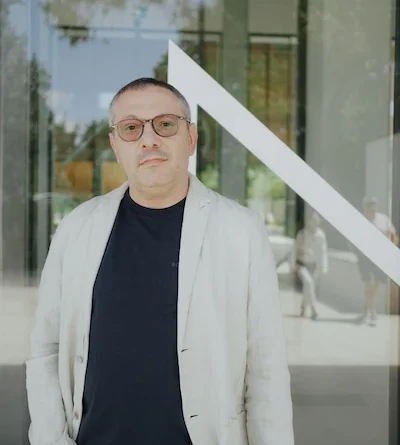
Alexander Kopylkov’s path into venture investing reflects this perspective. Before backing technology companies, he spent years running large real estate projects, where timelines were long, capital was exposed, and regulatory oversight was constant. Decisions had lasting consequences, and shortcuts were rarely forgiven.
After selling his business, he moved into venture capital, focusing on technology-led companies operating in demanding environments. He has since worked with more than 20 European startups across applied AI, advanced technologies, and innovation-driven platforms. His involvement tends to centre on strategic decisions rather than speed alone, helping founders think through how growth changes the nature of the business.
“Founders often underestimate how quickly the decision-making environment shifts as a company grows,” he says. “What works early on doesn’t always survive complexity.”
That sentiment is increasingly echoed across the European venture landscape. With exits taking longer and capital deployed more selectively, investors are paying closer attention to resilience and clarity. Applied AI, infrastructure-linked platforms, and advanced technologies continue to attract funding, even as the broader market remains cautious.
For founders, the implication is straightforward. Innovation still matters, but it is being judged in context. Technology is expected to function within real systems, shaped by regulation, operations, and human behaviour. Businesses that recognise this early tend to make fewer costly mistakes later.
Europe’s startup ecosystem is maturing, whether founders planned for it or not. Capital remains important, but it is no longer the whole story. Increasingly, it is the quality of partnership, not just the size of the cheque, that determines who makes it through the next phase.
Visit the rest of the site for more interesting and useful articles.
